Mold Remediation in Gettysburg, PA
Updated
Mold remediation in Gettysburg, PA: inspection, containment and removal for homes and small businesses across Gettysburg and Adams County, following the IICRC S520 procedure. Tell us what you're seeing and where, and we'll follow up with next steps.
Get a Free Mold Inspection Quote
Tell us what you're seeing and where. We follow up personally with next steps.
Mold remediation, answered directly
Mold remediation is the process of finding the moisture source causing mold growth, containing the affected area, physically removing contaminated material, and cleaning surfaces so the mold does not return. It is different from simply painting over or bleaching a visible patch, which does not address the underlying moisture.
Gettysburg's older housing stock, many built as stone or brick farmhouses well over a century ago, along with the region's humid Mid-Atlantic summers and clay-heavy Adams County soil, gives basements and crawlspaces here a real moisture problem that newer suburban construction elsewhere doesn't deal with as often. A finished basement, an older stone foundation, or a home near Rock Creek or Marsh Creek in low-lying parts of the borough are all more prone to the kind of persistent dampness that lets mold take hold.
The three conditions, per the IICRC S520 standard
The industry standard used to classify mold remediation work (ANSI/IICRC S520) sorts a site into one of three conditions before any work plan is written:
Condition 1
A normal, healthy indoor fungal ecology. No abnormal growth or contamination present.
Condition 2
Settled spores or light growth, usually carried in from a Condition 3 source elsewhere in the building (through HVAC, foot traffic, or airflow).
Condition 3
Actual, visible mold growth on a surface. This is what most homeowners are looking at when they call about a stain, a smell, or discoloration.
What mold remediation actually costs
Pricing depends on the square footage affected, whether the mold has reached structural material, and whether the moisture source itself needs repair (a leak, poor grading, a failed sump pump). According to Angi's 2026 cost data, the national average for professional mold remediation is about $2,300–$2,400, with most homeowners paying between $1,125 and $3,750. Contractors typically estimate $10–$25 per square foot of affected area. Larger jobs involving structural material, crawlspaces, or HVAC contamination can run $10,000–$30,000 or more.
| Job size | Typical range |
|---|---|
| Small, contained area (bathroom, closet) | $500 – $1,500 |
| Moderate (one room, basement corner) | $1,125 – $3,750 |
| Extensive (structural material, crawlspace, HVAC) | $10,000+ |
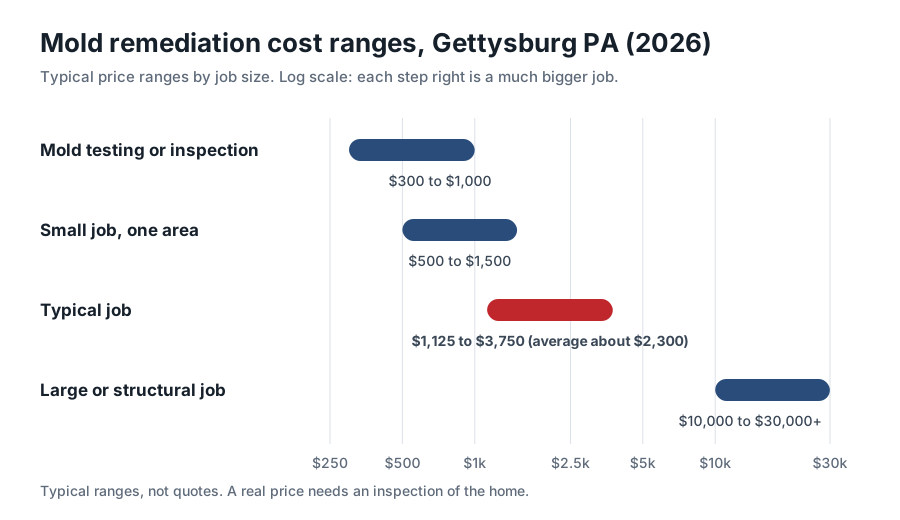
Source: Angi, 2026 mold remediation cost data. Every property is different — a free inspection is the only way to get a real number for yours. See the full cost guide for what drives price up.
Mold remediation by room, system and property type
Every job starts the same way, an inspection and a Condition 1, 2 or 3 classification under ANSI/IICRC S520, but the work itself looks different depending on where the mold is and what kind of property it's in. Here's what each situation usually involves in Gettysburg and Adams County, with the typical price range for that type of job.
Attic mold removal
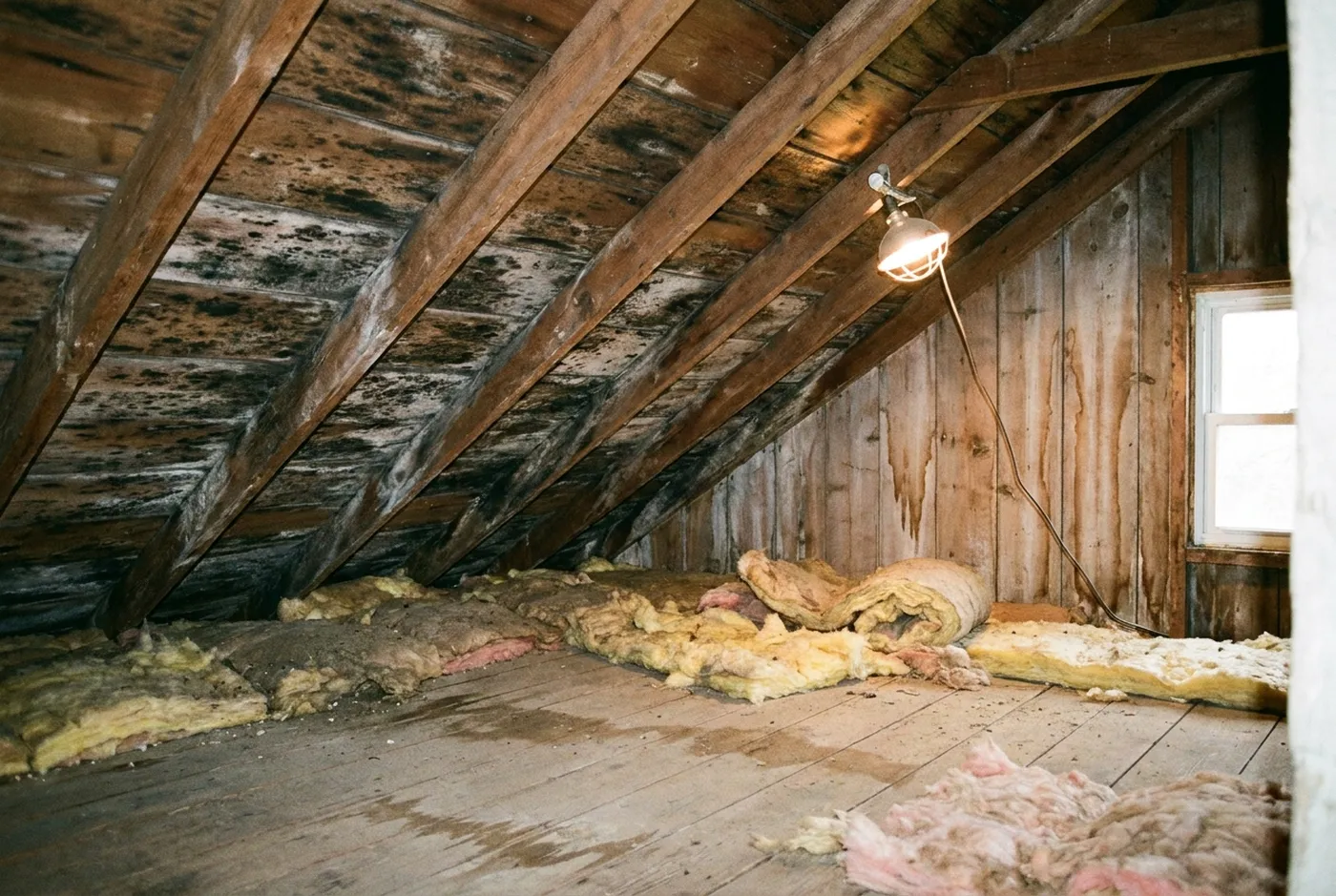
Most Adams County attic mold is warm indoor air leaking up into a cold attic and condensing on the roof deck, not a leak. A ventilation problem shows up as a dark haze spread across whole rafter bays, usually worst on the north slope, while a roof leak makes a single stained patch with a defined edge below a penetration. The fix depends on which one it is: a leak gets repaired and the deck gets cleaned, a ventilation failure gets a soffit-to-ridge airflow fix or the warm, moist indoor air stops reaching the attic in the first place. Typical range for an attic job is $700 to $4,000, averaging around $1,800. See the full attic mold guide.
Basement mold removal
Basement growth in this region almost always traces back to one of four water paths: capillary rise through an old stone or block foundation, hydrostatic pressure pushing through the wall after Adams County's clay-heavy soil holds a heavy rain against it, surface water from blocked gutters and downspouts, or summer condensation on cold masonry. A finished basement can hide any of those behind drywall for years. The job includes finding and correcting the water source, not just removing material. Typical range is $1,125 to $6,000 depending on whether it's one wall or a finished room. See the full basement mold guide.
Bathroom mold removal
Ordinary grout and caulk mold from daily humidity with nowhere to go, usually a surface that's under about 10 square feet, is a job a homeowner can often handle themselves per EPA guidance. It's a different job when water is getting behind the tile or around a failed shower pan: growth returns within weeks of cleaning, tile sounds hollow, grout crumbles, or there's a stain on the ceiling below. That version means opening the wall, not just re-caulking. Typical range is $500 to $1,500 for a contained bathroom job. See the full bathroom mold guide.
Crawl space mold removal
A crawlspace with exposed soil and outside vents takes on moisture in nearly any Pennsylvania summer, and because warm air rising through a house pulls replacement air in low, through the crawlspace, what's growing down there often shows up first as a smell on the ground floor. Wood framing sitting above damp soil is one of the most expensive kinds of growth to remediate because it's structural. The job typically includes removing contaminated material, drying the space and sealing a vapor barrier over the soil so it can't keep feeding moisture upward. Typical range is $1,500 to $8,000. See the full crawlspace mold guide.
Air duct and HVAC mold cleaning
HVAC contamination usually starts at the evaporator coil, where condensation keeps a surface wet inside a dark, enclosed system, and spreads into the ductwork from there. Not every musty HVAC smell needs duct cleaning; a coil problem or a clogged condensate drain can cause the same smell and duct cleaning alone won't fix it. A real HVAC mold job includes inspecting the coil and drain pan, not just the visible duct runs, before deciding what actually needs cleaning or replacing. Typical range is $1,000 to $6,000 depending on system size and how far the contamination has spread. See the full HVAC and mold guide.
Mold inspection and testing
An inspection is how a Condition 1, 2 or 3 classification actually gets made: a visual walkthrough, a moisture-meter check of suspect material, and air or surface sampling when the growth isn't visible or a lender, buyer or landlord needs lab-confirmed documentation. Many contractors fold a basic visual inspection into a remediation quote at no charge and bill separately only for lab sampling. A post-remediation clearance test, ideally from someone other than the company that did the work, is a separate inspection that confirms the job is actually done. Typical range is $300 to $1,000. See the full mold inspection guide.
Commercial mold remediation
Offices, retail space, churches and small multi-unit buildings follow the same S520 process as a house, inspection, containment, removal, cleaning, drying, verification, but the job is usually scheduled around business hours to avoid shutting the property down, and the equipment (containment barriers, negative-air machines, HEPA filtration) scales to a larger footprint. Small commercial jobs typically run $2,000 to $5,000; larger or structurally involved commercial projects can reach $30,000 or more. The same roughly $10 to $25 per square foot rate used for large residential jobs is the standard commercial benchmark too. See the full commercial mold remediation guide.
Black mold removal
"Black mold" usually means Stachybotrys chartarum, but color alone can't identify a species, several common lower-concern molds also look dark or black, so the process doesn't change based on color: contain, remove, clean, dry, verify, the same S520 sequence as any other job. There's no separate "black mold rate"; price depends on where it is and how much material is affected, the same as any other room or system on this list. See the full black mold guide.
Prices above reflect typical Gettysburg-area ranges by job type, from the same cost guide data (Angi, 2026) plus a 2026 commercial benchmark from 360Haz's commercial mold remediation cost guide. An inspection is the only way to get a number for your specific property.
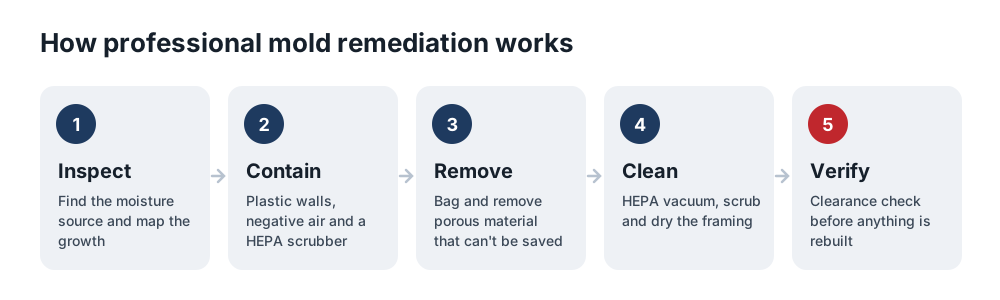
How a remediation project runs, start to finish
- Inspection: identify the moisture source and classify the affected area (Condition 1, 2, or 3)
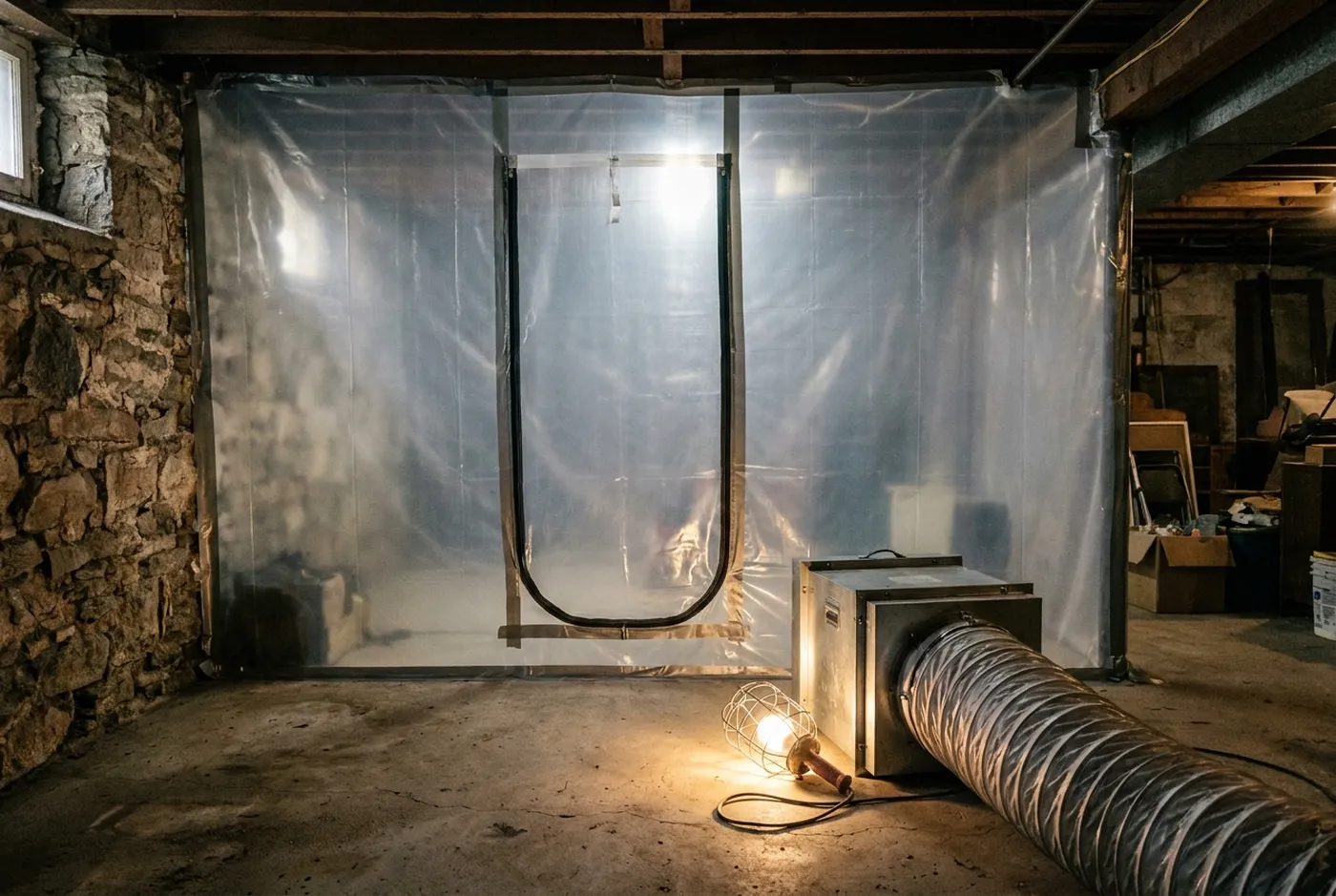
- Containment: seal off the work area with barriers and negative air pressure so spores don't spread to clean parts of the home
- Removal: strip and dispose of contaminated material that can't be cleaned (drywall, insulation, carpet padding)
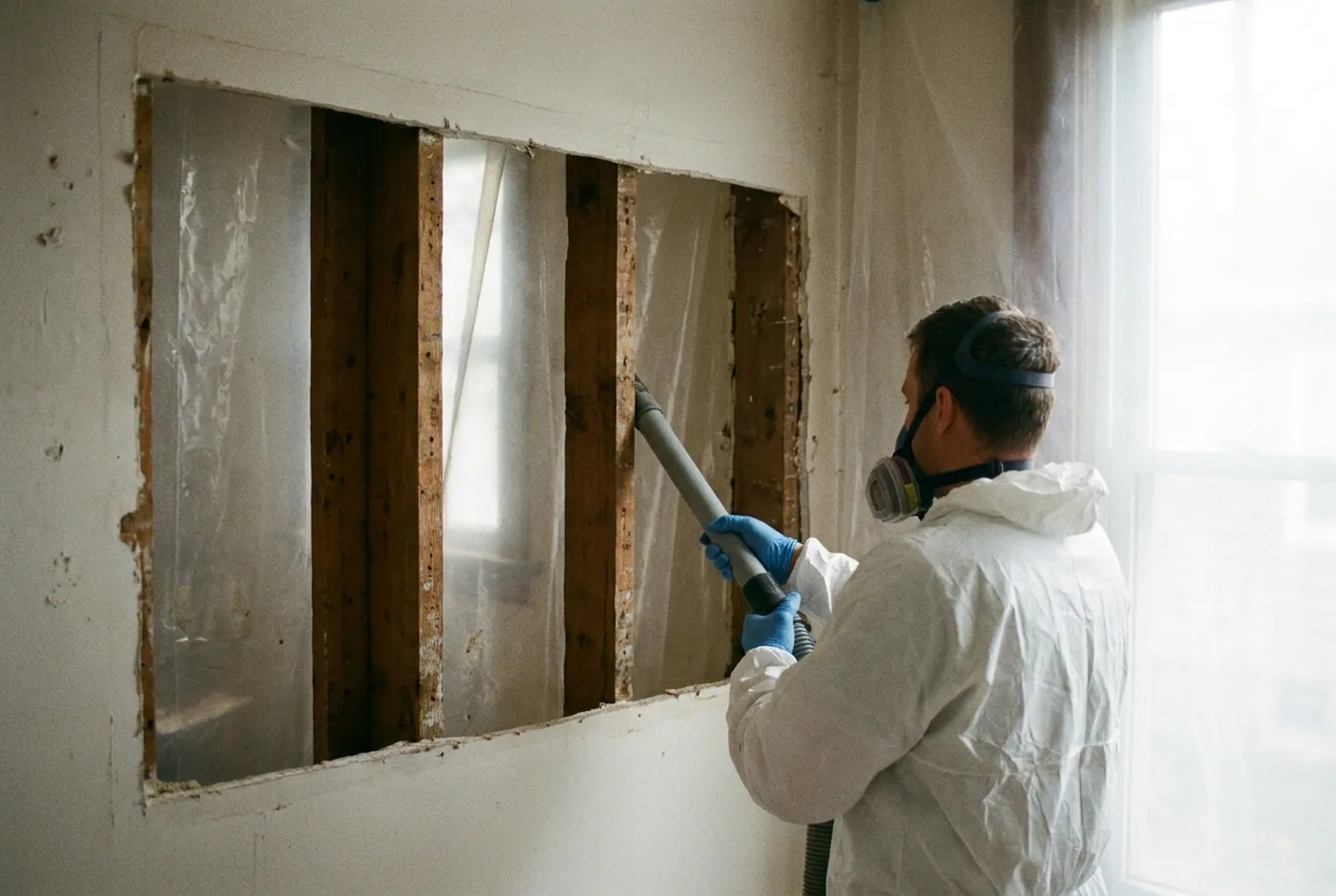
- Cleaning: HEPA-vacuum and treat remaining surfaces with an antimicrobial
- Drying: bring the area to a moisture level that won't support new growth
- Verification: confirm the work meets the plan before containment comes down
Have a moisture problem in Gettysburg or Adams County?
Tell us what you're seeing, where it is, and roughly how large the area is. We'll follow up with next steps.
Request a Free InspectionA note on licensing, for your own protection
Pennsylvania does not issue a specific state license for mold remediation contractors the way it does for radon mitigation. That doesn't mean there's no accountability: under Pennsylvania's Home Improvement Consumer Protection Act, contractors who do $5,000 or more of home improvement work a year must register with the state Attorney General's office, and home improvement contracts over $500 have to be in writing. Before hiring anyone for mold work, ask for their HIC registration number and confirm it in the state's public registry, and ask whether their technicians are trained to the IICRC S520 standard described above.
When mold is a weekend job, and when it isn't
The most quoted number in mold cleanup is ten square feet, roughly a three-foot by three-foot patch. Below that, the EPA says most homeowners can handle surface mold on non-porous material themselves. Above it, the agency points you to its commercial guidance or a contractor with mold experience.
That figure comes from the EPA's Mold Remediation in Schools and Commercial Buildings (EPA 402-K-01-001). Two things about it are widely misquoted and worth stating plainly. First, the EPA's own wording is "about" ten square feet and "in most cases", so it is a rule of thumb rather than a regulation, and there is no federal law requiring a licensed remediator at any size. Second, size is not the only trigger.
Reasons to call someone regardless of how small the patch is
- The water came from a sewage backup, a flooded creek, or any other contaminated source
- Your HVAC system is involved, since ductwork spreads spores through every room it serves
- Anyone in the house is immunocompromised, elderly, an infant, or has asthma or a respiratory condition
- You can smell mold but cannot find it, which usually means it is behind drywall, under flooring, or inside a wall cavity
- The growth keeps returning after you clean it, which means the moisture source was never fixed
The last one is the most common call we get in Adams County. Bleaching a basement wall every spring is not remediation; it is maintenance on a problem that has not been diagnosed.
What homeowners usually notice first
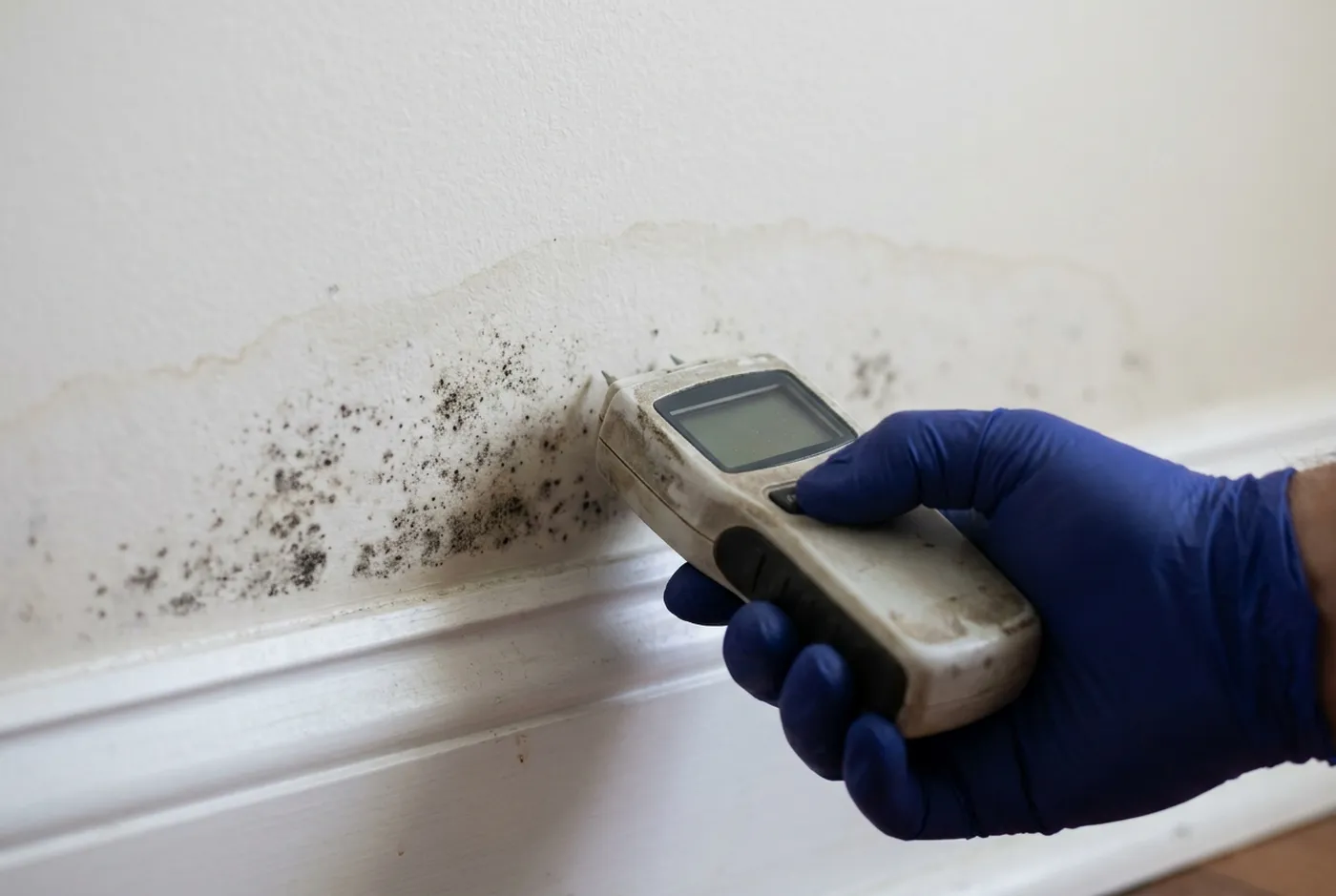
Most people do not find mold by seeing it. They notice something else first and go looking. In older Gettysburg homes the sequence is almost always the same.
The smell arrives before the stain
A persistent earthy or musty smell in a basement, closet or crawlspace is the most reliable early signal, and it often appears weeks before anything is visible. The smell comes from compounds released by actively growing mold, so a room that smells musty after rain but fine in dry weather is telling you there is growth responding to moisture somewhere out of sight.
Staining that comes back after painting
Discoloration that bleeds through fresh paint within a season is not a paint failure. It is moisture moving through the wall from behind, carrying whatever is growing in it to the surface.
Symptoms that improve when you leave the house
We are not a medical practice and cannot diagnose anything, but a pattern worth paying attention to is congestion, irritated eyes or a cough that eases when you are away from home for a few days and returns when you come back. The CDC's position is that damp indoor environments are associated with respiratory symptoms, and that the sensible response is to fix the dampness rather than to test for a specific species. If symptoms are your main concern, speak to a doctor as well as a remediator.
Warping, cupping and soft spots
Floorboards that cup, baseboards that swell, or drywall that feels soft to a knuckle are all evidence of sustained moisture. By the time material deforms, the water has usually been present long enough for growth to be established behind it.
Testing versus remediation, and why you usually need less testing than you think
Homeowners often assume the first step is an air test to identify the species. In most cases it is not, and the EPA says so directly: if you can see mold or smell it, sampling is generally unnecessary because the response does not change. You remove it and fix the moisture either way. No federal standards exist for acceptable airborne mold levels, so a spore count on its own cannot tell you whether a home is "safe".
Testing genuinely earns its place in a narrower set of situations: confirming that a completed remediation returned the space to normal conditions, settling a dispute with a landlord, seller or insurer where documentation matters, or locating hidden growth when the smell is obvious but the source is not. Our testing versus remediation guide covers where the line falls in practice.
Post-remediation verification is the test that matters
Under the IICRC S520 standard, a job is not finished when the material is out of the house; it is finished when the area has been verified as returned to Condition 1, a normal fungal ecology. Verification before containment comes down is the single most useful piece of documentation you can be handed, and it is worth asking any contractor whether their quote includes it.
Why Adams County housing stock is prone to this
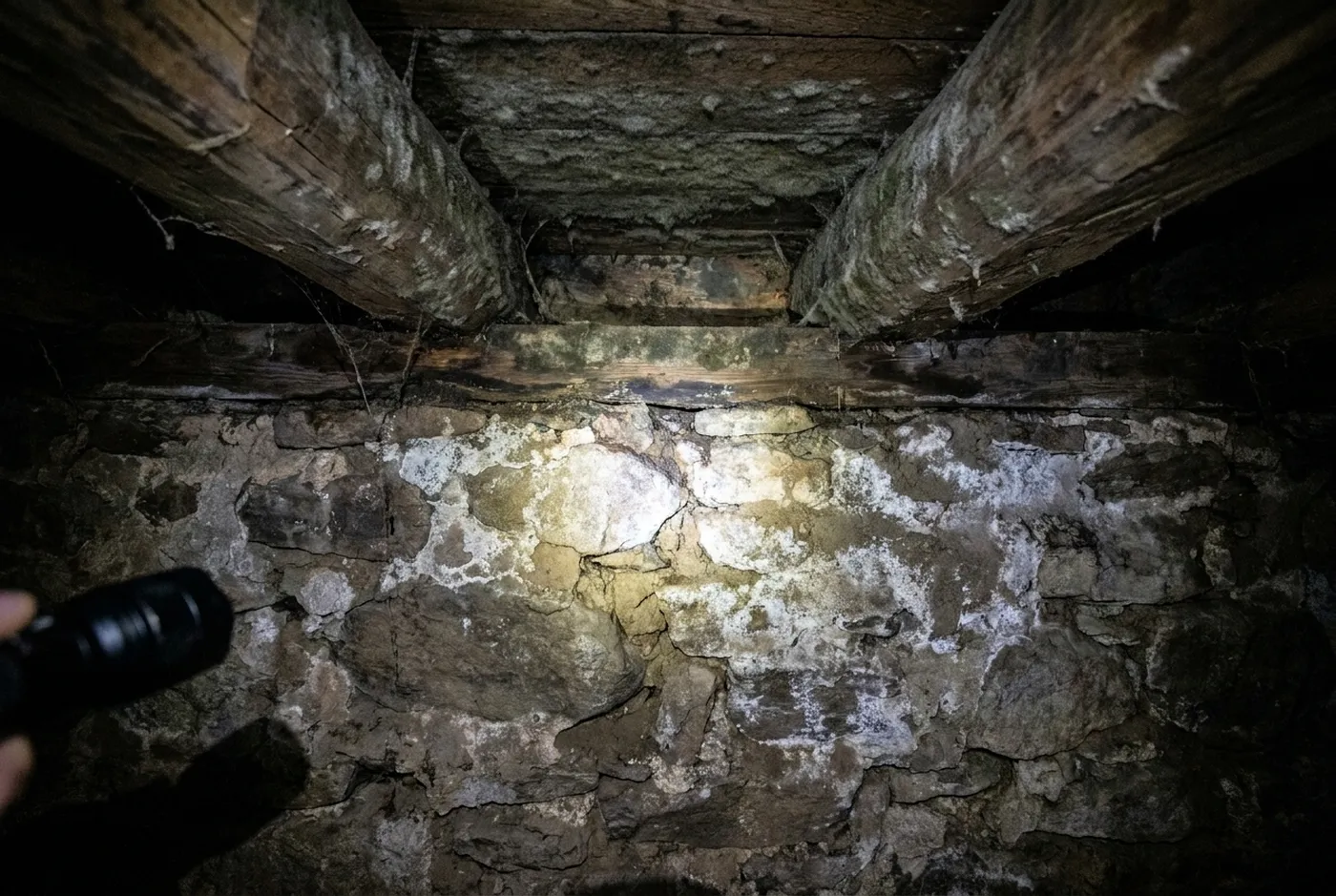
Gettysburg has an unusually old housing inventory for a town of its size, and the building methods behind those homes predate every modern moisture control we take for granted. That combination produces a specific set of recurring problems.
Stone foundations without a capillary break
Many nineteenth-century farmhouses and borough homes sit on mortared fieldstone. Stone wicks groundwater upward, and without the damp-proof membrane that modern footings include, that moisture arrives inside the basement and evaporates into the air. Finishing such a basement with studwork and drywall, as owners often do, creates an enclosed cavity that stays damp and unventilated.
Clay soil that holds water against the wall
Adams County soils carry a high clay fraction, which drains slowly. After the heavy summer storms this region gets, water sits against foundation walls instead of moving away, and hydrostatic pressure drives it through any crack or porous mortar joint it can find.
Additions that changed how the building dries
Homes here have often been extended several times across a century. Each addition changes airflow and drainage, and a roofline that now sheds water toward a wall that used to be exposed is a common source of a damp interior corner nobody can explain.
Retrofitted insulation and sealing
Tightening an old house for energy efficiency without adding mechanical ventilation traps the humidity that used to escape through a draughty envelope. This is one of the more frequent causes of new mold in a home that never had a problem for a hundred years. Our page on mold in Gettysburg's historic homes goes further into what to do about it without damaging period material.
Keeping it from coming back
Remediation removes what is growing. It does not, by itself, stop it recurring; that depends entirely on whether the moisture source was corrected. The measures that actually hold up over a few Pennsylvania winters are unglamorous.
- Keep indoor relative humidity between 30 and 50 percent, which usually means a dehumidifier running in a basement from May to September
- Extend downspouts well clear of the foundation and regrade so soil falls away from the wall
- Vent bathroom and kitchen exhaust to the outside rather than into an attic or crawlspace
- Clear gutters twice a year, which matters more on a house with mature trees close to the roofline
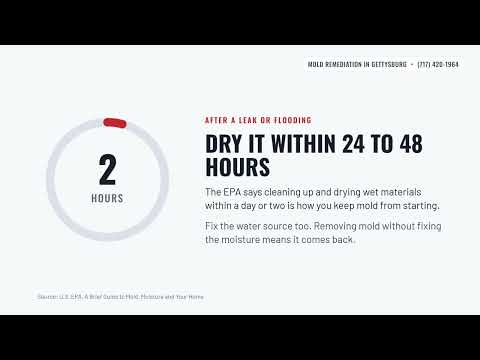
- Deal with plumbing leaks within about 48 hours, the window in which most growth establishes
- Have the crawlspace inspected after any significant flooding event
If you would rather talk it through than read about it, call (717) 420-1964 or send the details and we will follow up.
Questions we get asked most
How long does mold remediation take?
A contained single-room job is usually one to three days. Work involving structural material, a crawlspace or HVAC contamination can run a week or more, and any drying time needed before rebuilding sits on top of that.
Does homeowners insurance cover it?
It depends on the cause. Damage traced to a sudden accidental event, a burst pipe for instance, is often covered. Damage from long-term seepage, poor maintenance or flooding generally is not, and many policies cap mold coverage regardless of cause. Read your policy's mold limit before assuming either way.
Can I stay in the house during remediation?
Usually yes. Proper containment with negative air pressure is designed to keep the work area isolated from the rest of the home. Whether you should is a different question if anyone in the household has a respiratory condition.
Is black mold different from other mold?
"Black mold" usually refers to Stachybotrys chartarum, but plenty of harmless molds are also dark, and color alone does not identify a species. More importantly, the remediation procedure does not change based on species: contain, remove, clean, dry, verify. Our black mold page explains why the response is the same.
Do I need a licensed mold contractor in Pennsylvania?
Pennsylvania does not license mold remediation specifically, unlike radon mitigation. What it does require, under the Home Improvement Consumer Protection Act, is that contractors who do $5,000 or more of home improvement work a year register with the Attorney General, and that contracts over $500 are in writing. Ask for the HIC number, verify it in the state registry, and ask separately whether technicians are trained to IICRC S520.
Will bleach kill mold?
On a hard non-porous surface it will kill what it touches. On porous material such as drywall or framing it does not, because the growth extends below the surface and bleach is mostly water, which adds to the moisture problem. The EPA does not recommend bleach as a routine mold remediation method.
What's the difference between mold removal and mold remediation?
In practice the terms overlap. Mold removal usually means cleaning or tearing out the growth you can see. Remediation is the full job under the IICRC S520 standard: find and fix the moisture source, contain the area, remove what can't be cleaned, HEPA-clean what stays, and confirm it is dry before anything is closed up. Removal without fixing the moisture is why mold so often comes back.
Can you sell a house with mold in Pennsylvania?
Yes, but Pennsylvania's Real Estate Seller Disclosure Law requires a seller to complete a disclosure statement covering known material defects, and the state form asks directly about water infiltration and mold. Concealing a known problem creates liability that survives closing, so remediating and documenting it before listing is usually both cheaper and safer than hoping it goes unnoticed. See selling a home with mold.
Can mold be fully removed, or does it always come back?
A correctly done remediation job removes the affected material and cleans the area, but it does not by itself prevent mold from returning if the moisture source that caused it is still present. A leak, poor grading or chronic high humidity has to be corrected separately, or the same conditions produce the same result. See can mold come back after remediation.
What if I can't afford mold remediation right now?
Most companies accept a deposit with the balance due on completion, and many offer in-house payment plans or a third-party financing partner for larger jobs. If a sudden event like a burst pipe caused it, check your homeowners policy first, since that kind of damage is often covered even when long-term seepage is not. Ask about financing directly when you request a quote, since not every company advertises it up front.
Everything else on this site
Each of these answers one question properly rather than in a paragraph. Start wherever your situation sits.
Mold inspection and testing
What an inspection actually checks, and when air or surface sampling is worth paying for.
Commercial mold remediation
Offices, retail and small multi-unit buildings, scheduled around business hours.
Signs of mold in a house
What to look for, what to smell for, and where it hides in an older home.
Black mold
What Stachybotrys actually is, and why the removal procedure does not change.
Mold remediation cost
What drives a quote up, and the ranges to expect by job size.
The remediation process
Inspection through verification, step by step, under IICRC S520.
Testing vs remediation
When a test is worth paying for, and when it changes nothing.
Mold after a leak
The 48-hour window, and what to do inside it.
Historic homes and mold
Stone foundations, retrofitted insulation, and period material.
Choosing a contractor
HIC registration, IICRC training, and the questions to ask before signing.
Full FAQ
Insurance, timelines, staying in the house, and the rest.
All guides
The complete index of everything written here.
Service area
Every borough and township covered across Adams County.
About this site
Who runs it, and what it is and is not.
Basement mold
The four water paths into an Adams County basement, and which fix goes with which.
Crawlspace mold
Why a crawlspace problem becomes a whole-house smell, and the order encapsulation has to happen in.
Bathroom mold
Telling ordinary surface growth apart from water getting behind the tile.
Preventing mold
The moisture controls that hold up, ranked by how much difference each makes.
Attic mold
Telling a roof leak apart from a ventilation failure, and why extra vents can make it worse.
Mold in HVAC and ducts
Why it starts at the evaporator coil, and when duct cleaning is money wasted.
Mold after flooding
Water categories, what can be saved, and the first 48 hours in order.
Humidity and dew point
Why a room reading 50 percent can still grow mold behind the sofa.
Does insurance cover mold?
The sudden and accidental test, and the policy sublimit most people never read.
Selling a home with mold
What Pennsylvania seller disclosure requires, and why fixing it before listing costs less.
Renters and mold in PA
The implied warranty of habitability, and why written notice is the whole case.
Does bleach kill mold?
Where it works, where it fails, and why the EPA does not recommend it.
Musty smell, nothing visible
A room-by-room method for tracking it down before paying anyone.
Mold behind drywall
Checking a wall cavity without demolishing it, and how far to cut back.
White, green and orange mold
Why color identifies nothing, and the test that says it is not mold at all.
Joists, studs and subfloor
Surface mold or wood rot: the screwdriver test that decides who to call.
Under carpet and flooring
Why the padding goes first, and which floors survive a water event.
Closets and clothing
Why one closet grows mold every winter, and what can be saved.
How long it takes
Timelines by job size, and why drying is the stage that cannot be rushed.
Can you stay in the house?
When staying is fine, and what it is actually like to live around.
Containment and air scrubbers
What the sheeting and machines do, and how to spot containment theatre.
Proving the work is done
Clearance testing, moisture readings, and the file worth keeping.
Mold and the home inspection
Why reports read alarming, and how to respond without overpaying.
Serving Gettysburg and all of Adams County
We work throughout the borough of Gettysburg and the surrounding townships. See the full service area for details on specific towns.
Mold remediation by town and township
- Cumberland Township: battlefield-edge farmhouses and finished basements in Greenmount
- Straban Township: Hunterstown and Lake Heritage, across two flood-prone ZIP codes
- Mount Joy Township: farm properties on wells and septic, south of town
- Bonneauville: newer homes and townhouses with finished basements
- Highland Township: rural farmhouses near Marsh Creek
- Franklin Township: Cashtown and McKnightstown, spring runoff off South Mountain
- Fairfield: pre-1940 houses on stone at the foot of South Mountain
- Carroll Valley: wooded lots and houses that sit closed for weeks
- Arendtsville: one of the oldest-built boroughs in apple country
- Biglerville: older borough homes and orchard outbuildings
- New Oxford: shared walls around the town circle, 2011 flood basements
- Oxford Township: newer subdivisions around New Oxford
- East Berlin: historic district homes and a long flood history
- Abbottstown: stone basements and manufactured-home crawl spaces on U.S. 30
- Hamilton Township: newer rural homes next to Abbottstown
- Littlestown: rowhouses near the Maryland line, almost no flood history
- McSherrystown: attached homes next to Hanover where leaks cross party walls
- Conewago Township: townhouses and newer homes around Midway
Every other borough and township we cover is on the service area page.